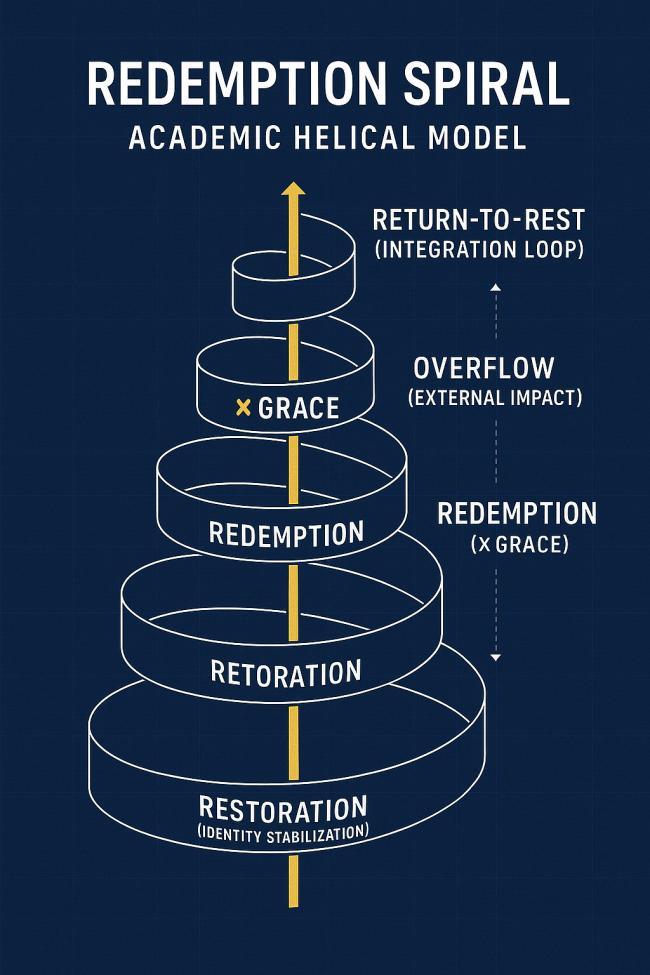
Helical Model
Redemption Spiral
Restoration, Reform, Redemption, Overflow, and Return-to-Rest move as an upward cycle rather than a closed loop.
Unified Theory of Redemption
These diagrams visualize how restoration moves through identity, structure, grace multiplication, overflow, and scalable reform.
Theory Expansion
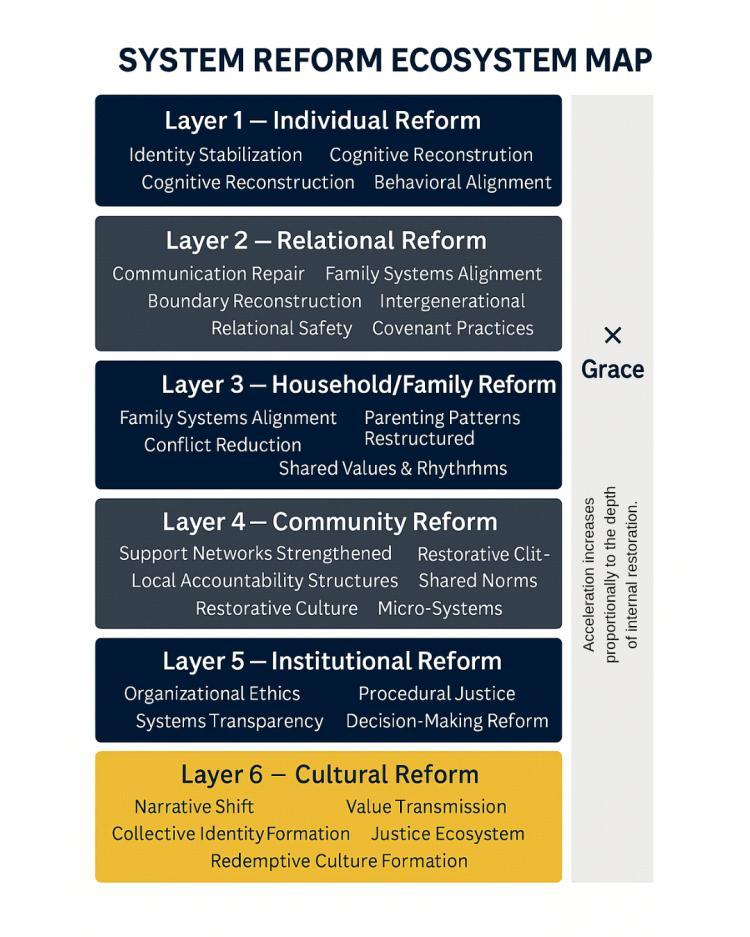
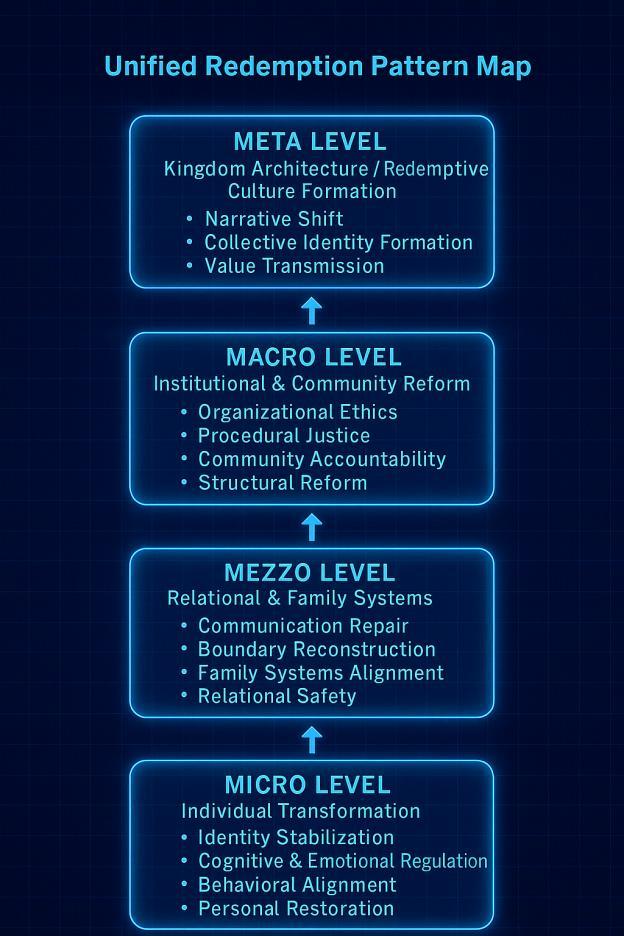
The visual models show why restoration is not a flat checklist. It cycles, ascends, recalibrates, and scales from the internal life of a person into relationships, households, institutions, and culture.
Restoration, Reform, Redemption, Overflow, and Return-to-Rest move as an upward cycle rather than a closed loop.
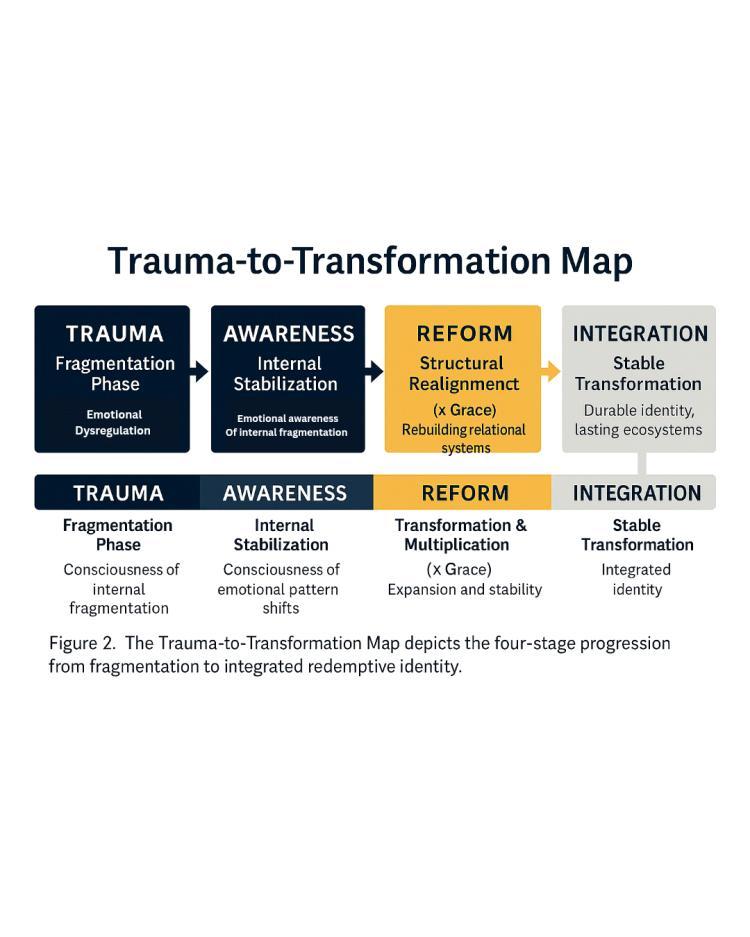
Fragmentation becomes integrated identity through awareness, restoration, reform, redemption, and stable transformation.
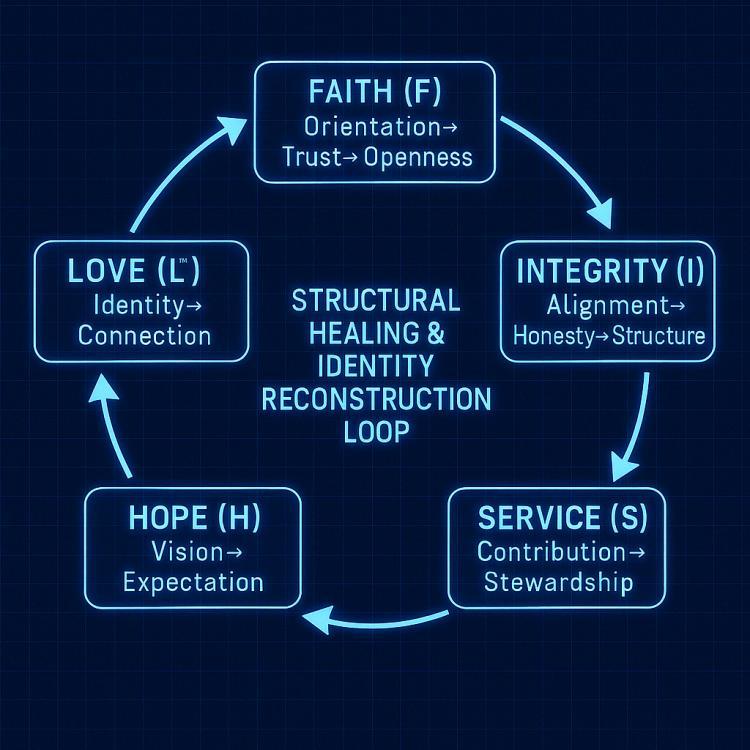
Faith, Integrity, Service, Hope, and Love form a reconstruction loop that brings healing into structure.
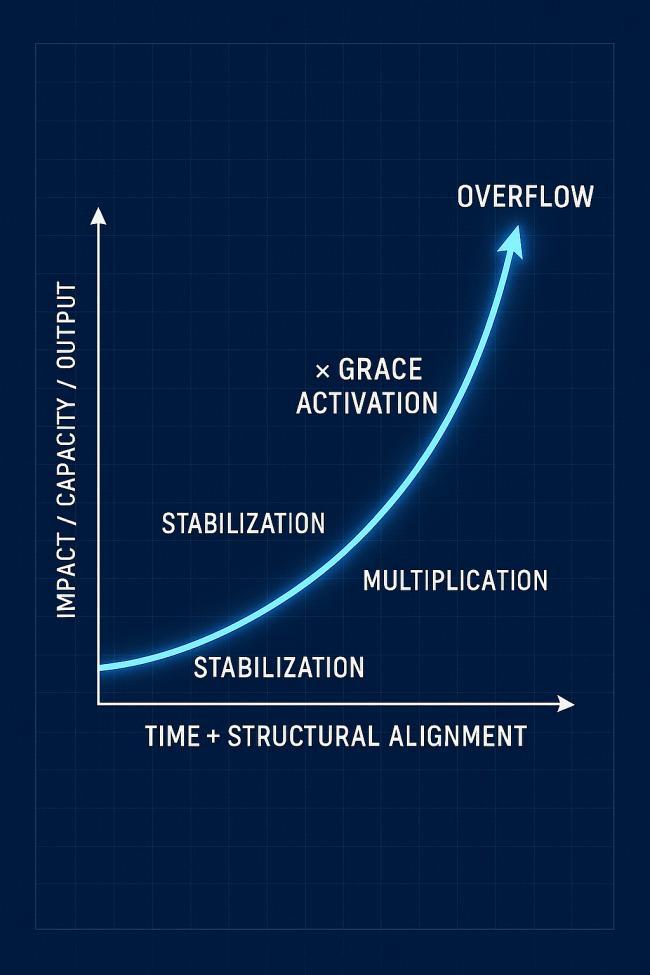
Grace activates after stabilization and alignment, producing capacity that exceeds natural effort.
Redemption Flow Cycle
Transformation returns to rest so it can re-enter restoration at a deeper level. That is how maturity compounds without losing stability.
Identity stabilization, internal clarity, emotional regulation, and recovered authority.
System rebuilding, boundaries, structure, behavioral alignment, and new containers.
Grace multiplication creates disproportionate capacity, leadership, output, and impact.
Transformation extends outward into family, community, organizations, and public systems.
Rest, reflection, recalibration, and integration prepare the next level of restoration.
Scale Logic
UTR explains how internal restoration can become relational repair, household stability, institutional accountability, and eventually cultural reform when the formula remains aligned.
Public Positioning
On the public site, these visuals should establish the depth and coherence of the theory. Full academic explanation, case-study notes, and internal development material can stay curated until each release is ready.
View resource library